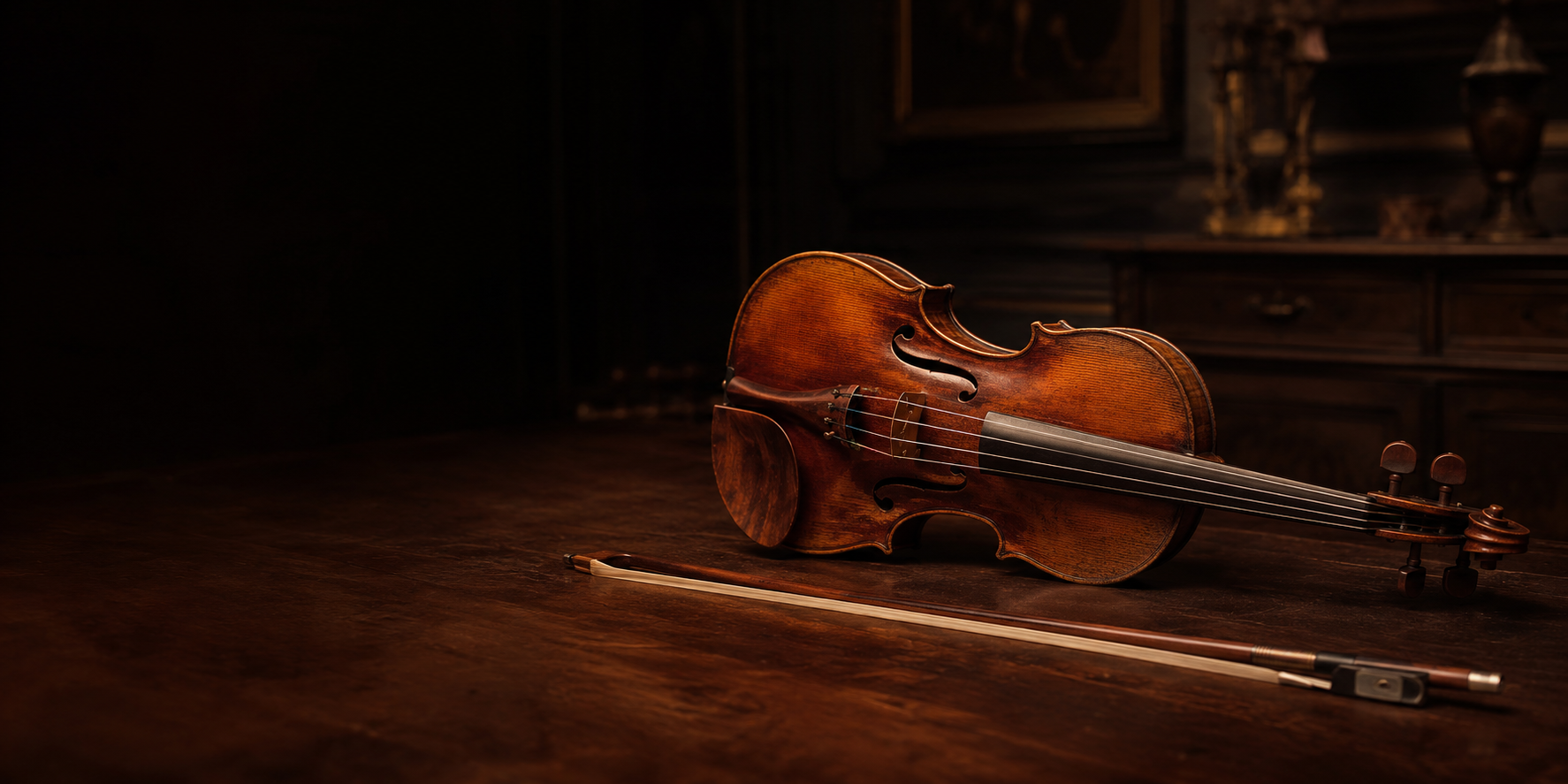
François-Xavier Tourte, often called Tourte le Jeune to distinguish him from his elder brother Nicolas-Léonard, was born into a Parisian family already involved in instrument and bow making. He first trained as a clockmaker, an experience often associated with the exceptional precision of his later metalwork, and began making bows during the 1770s.
Tourte’s career coincided with profound changes in musical life. Larger concert rooms, evolving technique and a wider tonal vocabulary demanded a bow capable of greater control, projection and articulation. Working within a generation of intense experimentation, Tourte refined the length, balance, concave camber and adjustable frog of the bow into a remarkably coherent system.
By about 1800 his independent Paris workshop was established on the Quai de l’École. The bows of his mature period unite structural logic with sculptural restraint: the head, stick, frog and button function as an integrated whole. His output includes violin, viola and cello bows, with the finest examples prized as much for their playing qualities as for the exactness and beauty of their workmanship.